

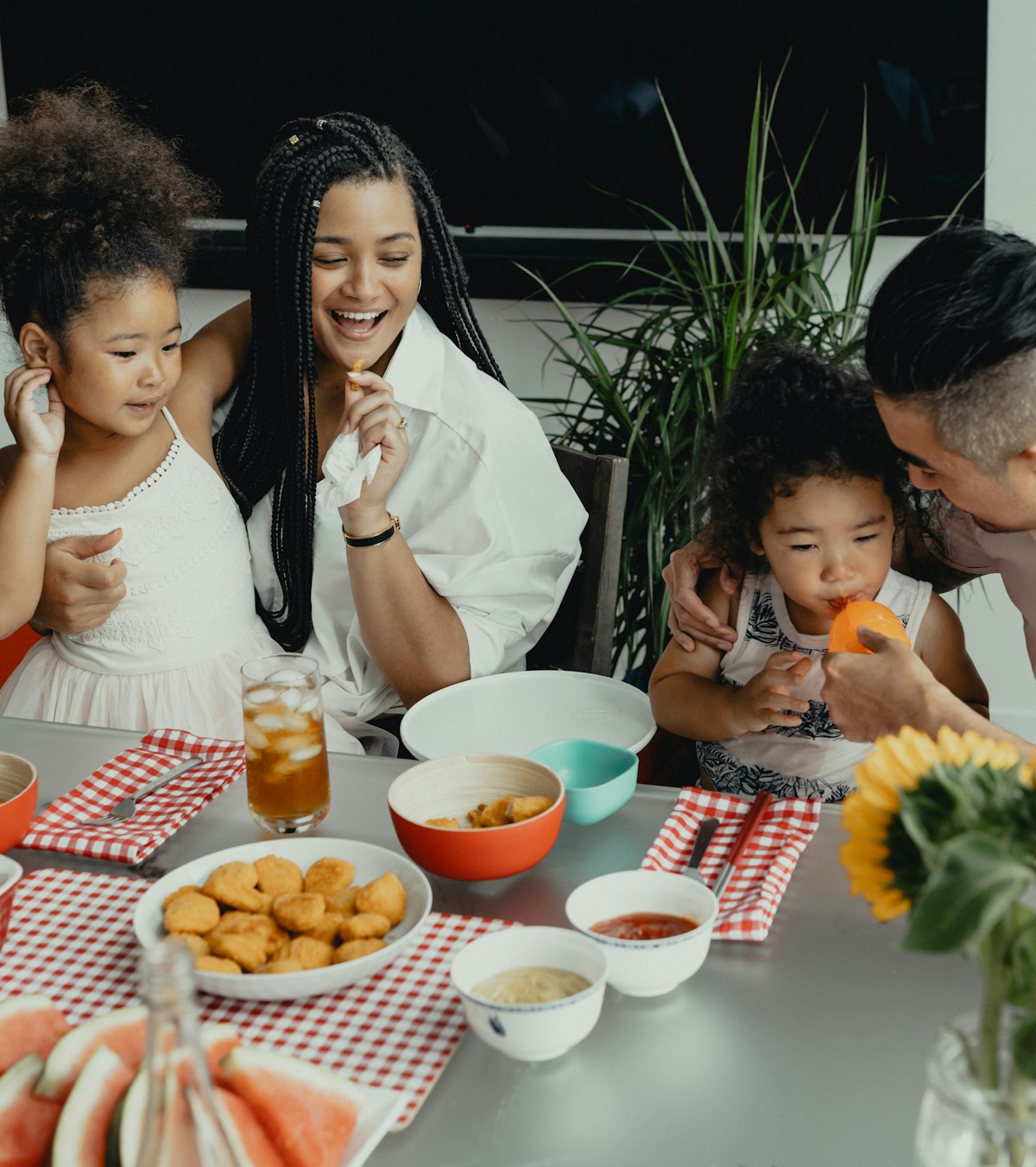
Family meals are about more than food. For a toddler, the dinner table can be one of the best places in the house to learn to talk.
Everyone is sitting together. There are interesting things to look at, smell and taste. And for once, nobody is rushing off anywhere.
Making the most of these moments doesn’t take any special skill. For families who have concerns about a child’s speech, Perth practice Kid Speak offers paediatric speech therapy at clinics in Shenton Park, Success and Baldivis.
This post looks at simple ways to turn everyday meals into chances for your little one to hear and use more words.
Why mealtimes work so well
Children learn language through interaction with the people around them. Mealtimes are full of it.
There is a natural routine to a meal. You set the table, serve the food, eat, then clear up. Toddlers like routines because they can predict what comes next, and predictable moments are easier to talk about.
Food also gives you plenty to talk about. Colours, shapes, tastes, temperatures and textures are all right there on the plate.
Sit together, at the same level
Toddlers learn a lot from watching faces. They see how your mouth moves when you speak and read your expressions to understand what you mean.
If you can, sit where your child can see you clearly. A high chair pulled up to the table, rather than off to the side, makes a real difference.
Eating together also lets your child copy you. They watch you use a spoon, try a new food and chat with others at the table.
Turn off the screens
It is tempting to put a show on to get through dinner. Most parents have done it.
Screens at the table do get in the way of conversation, though. Your child’s attention goes to the screen, and the chance to chat with you is lost. Background noise from a TV also makes it harder for young children to pick out words.
Try a few screen-free meals a week to start. You might be surprised how much more talking happens.
Simple ways to build language over a meal
You don’t need to turn dinner into a lesson. Small habits, used often, are what count.
- Name the foods as you serve them, such as “Here’s your rice” or “Do you want carrot?”
- Describe what you can see and taste, like “This apple is crunchy” or “The soup is hot”
- Offer simple choices, such as “Peas or corn?”, so your child has a reason to use a word
- Count things on the plate together, even if your toddler just watches and listens
- Talk about what you did that day, and what you might do tomorrow
Keep your sentences short and clear. Then give your child time to respond. A pause of a few seconds can feel long to an adult, but toddlers often need it.
Build on what your child says
When your toddler says a word, you can gently add to it. If they say “milk”, you might reply “More milk?” or “Cold milk”.
This is called expanding. You are showing them the next small step without asking them to copy you.
If they say a word incorrectly, say it back the right way without making a fuss. If they point and say “nana”, you can reply “Yes, banana. You love banana.” They hear the correct word in a warm, relaxed way.
Let them help in the kitchen
Cooking together is a great extension of mealtime talk. Toddlers can wash vegetables, stir a bowl or tear up lettuce with a little help.
Each step gives you new words to use. Pour, mix, wash, cut, hot, cold, big and small all come up naturally. Your child also learns the order of steps, which helps with understanding sequences later on.
Keep it safe and simple. Even a few minutes of helping with a salad gives you plenty to chat about.
Shopping for food is another good chance to talk. At the market or supermarket, let your toddler hold the apples, point to the bananas or put the bread in the trolley. Name each item as it goes in, and talk about what you might cook with it when you get home.
Keep the mood light
Pressure rarely helps a child talk more. If every meal becomes “Say please. Say carrot. What colour is this?”, it can start to feel like an exam.
Aim for a mix of comments and questions. Tell your child what you notice, and only ask a question now and then. A relaxed, happy mealtime is a much better setting for language than a quiz.
Fussy eating can make meals stressful, too. Try to keep food battles and talking separate. Your child should feel they can chat at the table, whatever is on their plate.
Include the whole family
Older siblings, grandparents and other adults at the table all add to the conversation. Toddlers learn a lot from listening to others talk, even when they aren’t joining in.
Take turns sharing something about your day. Even a toddler can have a turn, with a word, a point or a sound. Being part of the family conversation is good practice for listening and taking turns.
When you might want advice
All children develop at their own pace. Still, it is fine to ask questions if something worries you.
Maybe your child is hard to understand, uses very few words or seems frustrated when trying to tell you things. A chat with your child health nurse or GP is a good first step. The Raising Children Network, supported by the Australian Government, also has practical information on child development.
If a speech pathology assessment is suggested, a practice like Kid Speak can help. Its speech therapy page describes a play-based, fun approach that is shaped around each child’s needs and goals, and its list of services also includes mealtime management.
A daily habit worth keeping
You already sit down to eat most days. With a few small changes, those meals can become one of the richest parts of your child’s day for learning language.
Pick one idea from this post and try it this week. It might be screen-free dinners, naming each food as you serve it or letting your toddler help with the salad.
Keep it relaxed and keep chatting. The words will follow.